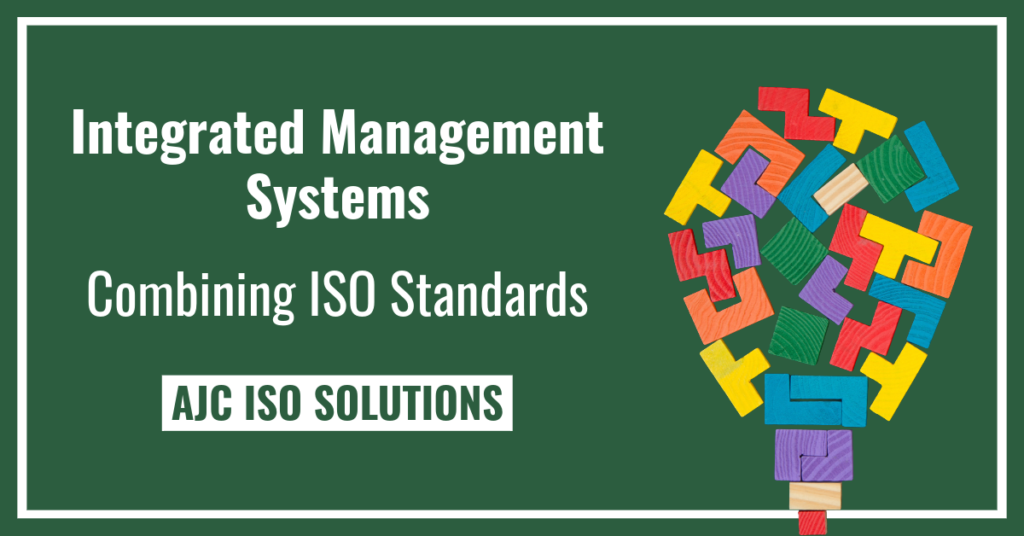
Integrated Management Systems: Combining ISO Standards
As organisations grow, many find themselves implementing multiple ISO standards to address different areas of business performance.
Whether it is ISO 9001 for quality, ISO 14001 for environmental management, ISO 45001 for health and safety, or ISO 27001 for information security, managing separate systems can quickly become complex and inefficient.
This is where an Integrated Management System (IMS) can provide significant value.
This guide explains what an Integrated Management System is, why organisations combine ISO standards, and how integration can improve efficiency, compliance, and business performance.
What Is an Integrated Management System?
An Integrated Management System (IMS) combines two or more management systems into a single framework.
Rather than managing separate processes, documents, audits, and objectives for each ISO standard, an IMS creates one unified system that addresses multiple requirements simultaneously.
Common ISO standards integrated within an IMS include:
- ISO 9001 – Quality Management
- ISO 14001 – Environmental Management
- ISO 45001 – Occupational Health and Safety Management
- ISO 27001 – Information Security Management
- ISO 50001 – Energy Management
- ISO 22301 – Business Continuity Management
The aim is to streamline management activities while maintaining compliance with each standard.
Why Combine ISO Standards?
Many ISO standards are built using a common framework known as Annex SL.
This means they share similar requirements relating to:
- Leadership and commitment
- Risk management
- Objectives and planning
- Competence and training
- Internal audits
- Management review
- Continuous improvement
Because these requirements overlap significantly, organisations can manage them through one integrated system rather than multiple standalone systems.
Benefits of an Integrated Management System
Organisations that combine ISO standards often experience significant operational benefits.
These include:
- Reduced duplication of processes
- Simplified documentation
- Lower administrative burden
- Improved communication across departments
- More efficient audits
- Better risk management
- Reduced certification costs
- Stronger organisational performance
An IMS allows businesses to focus on improving operations rather than managing multiple separate compliance frameworks.
Step 1: Identify Which ISO Standards Apply
The first step is determining which standards are relevant to your organisation.
This depends on factors such as:
- Industry requirements
- Customer expectations
- Regulatory obligations
- Business risks
- Growth objectives
Many organisations begin with ISO 9001 before expanding into environmental, health and safety, or information security management.
Understanding your priorities helps shape the scope of the integrated system.
Step 2: Establish a Common Management Framework
The foundation of an IMS is a shared management structure.
This typically includes:
- Policies
- Objectives
- Risk management processes
- Document control
- Training procedures
- Internal audit programmes
- Management reviews
Creating common processes wherever possible reduces duplication and simplifies administration.
Step 3: Align Policies and Objectives
Separate management systems often result in multiple policies and conflicting objectives.
An Integrated Management System allows organisations to align strategic goals across all standards.
For example:
- Quality objectives can support customer satisfaction
- Environmental objectives can reduce waste
- Health and safety objectives can minimise workplace incidents
- Information security objectives can protect business data
When objectives work together, organisational performance improves.
Step 4: Integrate Risk Management
Risk-based thinking is central to modern ISO standards.
Rather than maintaining separate risk registers, organisations can establish a unified risk management process.
This enables businesses to identify:
- Operational risks
- Environmental risks
- Health and safety risks
- Information security risks
- Compliance risks
A consolidated approach improves visibility and supports better decision-making.
Step 5: Standardise Documentation
One of the biggest advantages of integration is reducing documentation.
Instead of creating separate procedures for each standard, organisations can develop unified processes covering multiple requirements.
Examples include:
- Competence and training procedures
- Document control processes
- Corrective action procedures
- Internal audit programmes
- Management review processes
This simplifies system management and improves employee understanding.
Step 6: Deliver Integrated Training
Employees should understand how the integrated system applies to their role.
Training may include:
- General IMS awareness
- Quality management responsibilities
- Environmental obligations
- Health and safety procedures
- Information security controls
Integrated training reduces confusion and reinforces a consistent approach to compliance.
Step 7: Conduct Integrated Internal Audits
Rather than auditing each standard separately, organisations can perform integrated audits.
This allows auditors to assess multiple ISO requirements during a single review.
Benefits include:
- Reduced disruption
- Improved audit efficiency
- Lower resource requirements
- Better understanding of process interactions
Integrated audits often provide a more accurate picture of organisational performance.
Step 8: Use Combined Management Reviews
Management reviews are required across most ISO standards.
An Integrated Management System enables leadership teams to review:
- Performance objectives
- Audit findings
- Risk assessments
- Compliance obligations
- Improvement opportunities
Through a single management review process.
This provides a more strategic and comprehensive overview of business performance.
Step 9: Prepare for Integrated Certification Audits
Certification bodies can often assess multiple standards during one integrated audit.
This offers several advantages:
- Reduced audit time
- Lower certification costs
- Less operational disruption
- Improved coordination
Preparing for integrated certification requires ensuring all elements of the IMS are fully implemented and understood throughout the organisation.
Step 10: Focus on Continuous Improvement
An Integrated Management System should support continual improvement across all business functions.
Organisations should regularly:
- Review performance data
- Assess risks and opportunities
- Analyse audit findings
- Investigate incidents and non-conformities
- Implement corrective actions
Continuous improvement ensures the IMS remains effective and aligned with business objectives.
Common Challenges When Combining ISO Standards
“Trying to integrate everything at once”
A phased approach is often more manageable and sustainable.
“Maintaining duplicate procedures”
Integration should reduce duplication, not create additional administration.
“Treating standards as separate systems”
The greatest benefits come from managing standards through a unified framework.
“Lack of employee awareness”
Staff must understand how the integrated system affects their responsibilities.
How Long Does IMS Implementation Take?
Implementation timelines vary depending on the organisation and standards involved.
Typical timescales include:
- Small businesses: 2–4 months
- Medium-sized organisations: 4–8 months
- Larger organisations: 6–12 months or more
Existing management systems and organisational maturity can significantly influence implementation speed.
Is an Integrated Management System Worth It?
For organisations operating multiple ISO standards, the answer is usually yes.
An IMS helps reduce complexity while improving consistency, efficiency, and compliance.
Rather than managing several disconnected systems, businesses benefit from a single framework that supports operational excellence and continual improvement.
Final Thoughts
An Integrated Management System allows organisations to combine multiple ISO standards into one cohesive framework.
By aligning processes, objectives, audits, and management activities, businesses can reduce duplication, improve efficiency, and strengthen overall performance.
As more organisations adopt multiple ISO standards, integration is becoming the preferred approach to achieving sustainable compliance and long-term business success.
Build an Integrated Management System That Works
If your organisation is implementing multiple ISO standards, an Integrated Management System can help simplify compliance and improve performance.
We can help you:
✔ Integrate multiple ISO standards into one system
✔ Simplify documentation and processes
✔ Prepare for integrated certification audits
✔ Build a practical, business-focused IMS
Get a free quote or request a call back today and discover how an Integrated Management System can help your organisation achieve more with less complexity.